Baguiati, Kalighat, Bardhaman, Midnapore, Bankura, Arambagh
+91 7477886099


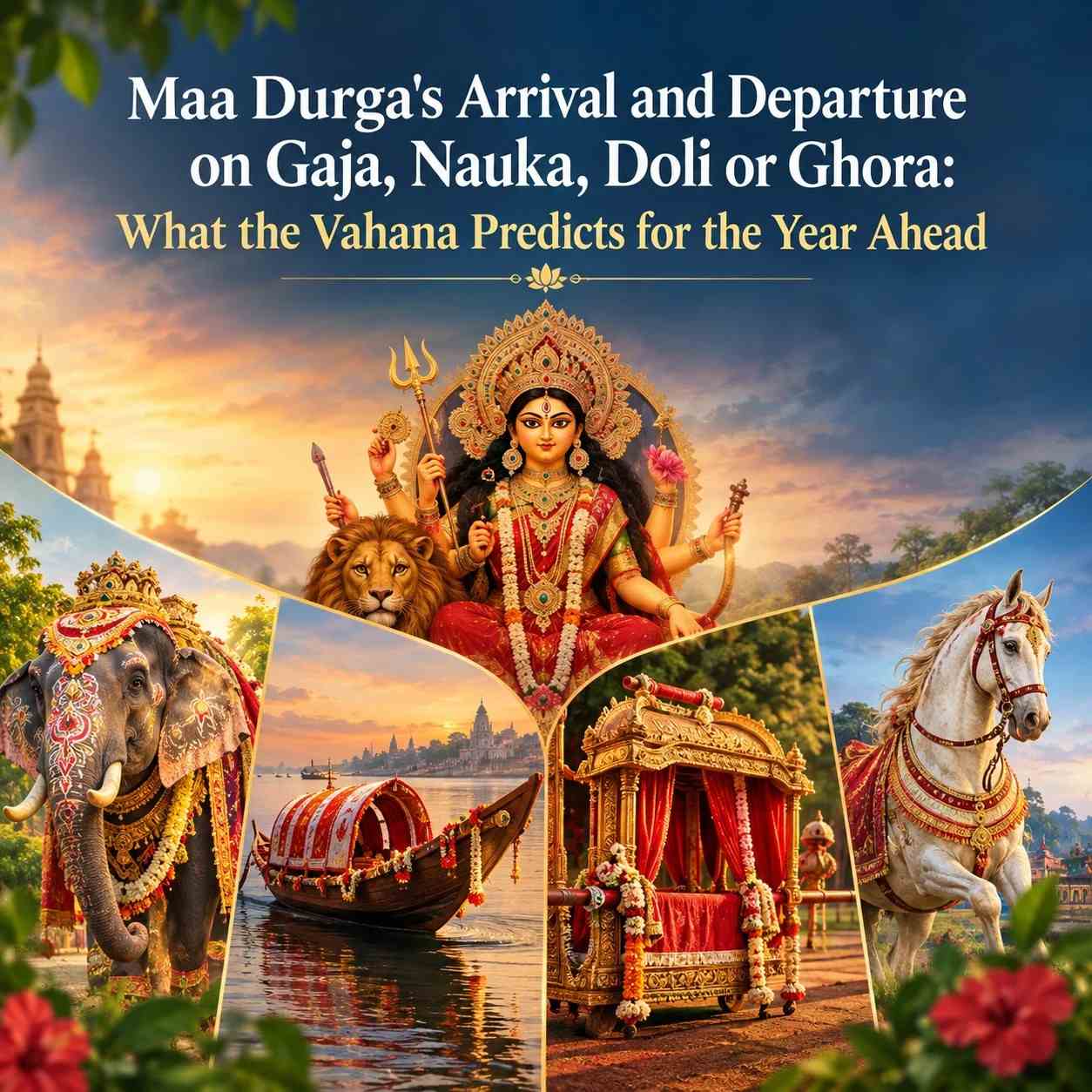
Namaskar , I am Anjan Shastri, Every year, a few days before the first beat of the dhak, one question travels through every Bengali home: "Ma kishe ashchen?" On what is Mother coming this time? The answer decides how families talk about the year ahead, from harvests and markets to health and peace of mind.
In this article I explain the Vedic logic behind Maa Durga's vahana, what each of the four vahanas signifies, and my Durga Puja 2026 arrival prediction for you and your family.
In Vedic Astrology, the Devi does not simply appear at Durga Puja. She travels, and the way she travels is read as a sign for the collective mood of the coming year. The classical verses attached to the Devi Bhagavata tradition and preserved in our Bengali panjikas link her mount to rainfall, crops, public order and health. This is why even those who never open a Kundli through the year ask about the vahana at Mahalaya.
I always tell my clients one thing first: the vahana is a seasonal indication, not a personal verdict. It describes the general atmosphere of the year. How it touches you depends on your own Kundli and on the way you prepare.
The rule is simple and tied to the weekday. In Bengali panjikas, the weekday on which Shashthi falls decides how Maa arrives, and the weekday of Dashami decides how she returns. The same table is used for both journeys.
• Sunday or Monday: Gaja (elephant)
• Tuesday or Saturday: Ghora (horse)
• Wednesday: Nauka (boat)
• Thursday or Friday: Doli (palanquin)
Some panjikas count by Saptami, and a difference of a tithi between almanacs can shift the result. Families should follow the panjika their household puja has always followed.
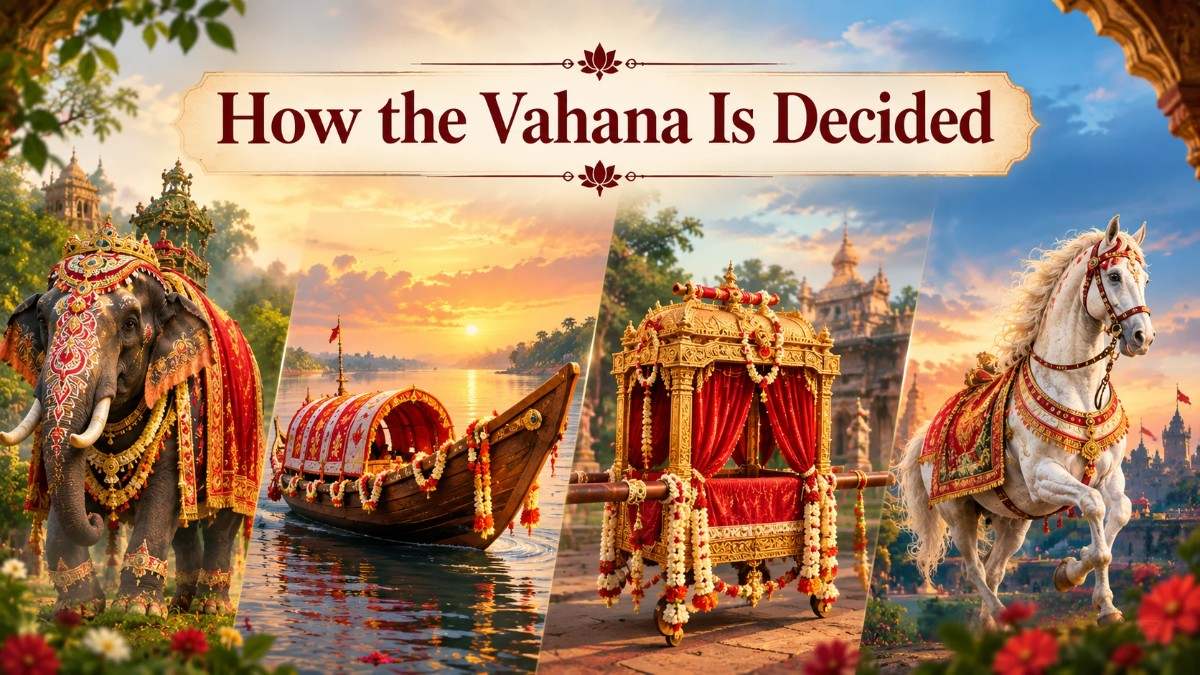
Gaja (elephant): The most welcomed sign. Tradition links it with good rainfall, full granaries and a green, prosperous earth.
Nauka (boat): A sign of abundance in crops and trade, and of success in efforts. Since the boat belongs to water, it also asks for care with heavy rain and rising rivers.
Doli (palanquin): Traditionally read as a warning about illness, epidemics and disturbed public life. It reminds us to guard health and hygiene.
Ghora (horse): Read as chhatrabhanga, the breaking of the royal umbrella. It points to unrest, a shaken sense of authority and sudden changes of direction.
This year, Maha Shashthi falls on Saturday, 17 October 2026. By the Bengali rule, Saturday means Maa Durga arrives on the Ghora, the horse. This is the heart of my Durga Puja 2026 arrival prediction.
The horse is swift and restless. Saturday belongs to Shani, and the Ghora is linked with Tuesday as well, the day of Mangal. Both are planets of discipline, friction and hard lessons. The traditional reading of chhatrabhanga therefore speaks of instability in leadership, disagreements within groups and institutions, and fast, unexpected changes in the public mood.
I do not read this as a cause for fear. A horse also stands for speed and courage. For individuals, it is a year to avoid hasty decisions, to keep travel and vehicles in good order, and to think twice before signing agreements in a rush.
Bijoya Dashami in Bengal falls on Wednesday, 21 October 2026. A Wednesday departure means Maa returns on the Nauka, the boat. Wednesday is ruled by Budh (Mercury), the planet of trade, communication and intellect.
The classical reading is a good one for growth: increase in crops and water, and success in trade and business. It also warns of excess water, meaning strong rains and flooding in vulnerable areas. A year that begins restless on the horse is therefore expected to settle on the boat, bringing movement, commerce and a steadier mood by the end of the cycle.

Whatever the vahana, the Devi responds to sincerity. These are the simple steps I suggest every year:
• Recite the Durga Saptashati or at least the Devi Kavach on Saptami, Ashtami and Navami.
• Offer red hibiscus and light a ghee lamp before Maa's image each evening.
• Donate food, clothes or school supplies on Ashtami. This is especially helpful for people running Shani or Mangal periods in the Kundli.
• Keep your vehicles serviced and avoid impulsive financial commitments until the year settles.
• During the monsoon months, take sensible care about water-logging, drains and travel.
Q1. On what is Maa Durga coming in 2026? According to the Bengali rule, Maa Durga arrives on the Ghora (horse) because Shashthi falls on a Saturday.
Q2. How will Maa Durga depart in 2026? Bijoya Dashami falls on a Wednesday, so she departs on the Nauka (boat).
Q3. Is the Durga Puja 2026 arrival prediction a bad omen? Not necessarily. The Ghora indicates unrest and quick change, but it is balanced by the Nauka departure, which brings growth and good crops. Awareness and preparation matter more than worry.
Q4. Do all panjikas agree on the vahana? Not always. Small differences in tithi timings can change the weekday count, so follow the panjika your family trusts.
Q5. Does the vahana affect my personal Kundli? It describes the general atmosphere. Your personal results depend on your planetary periods and transits, which a proper Kundli reading can explain.
Maa Durga's vahana is a message of the season, offered with love. This year's Durga Puja 2026 arrival prediction asks us to be steady, thoughtful and compassionate as Maa comes on the horse, and to look forward to growth as she leaves on the boat. May her blessings stay with you and your family through the year ahead. Shubho Pujo.
If you wish to know how this year will unfold in your own life, I welcome you to reach out for a personal consultation. book a Kundli consultation with me.
Call/WhatsApp: +91 7477886099
Email: astro@anjanshastri.com
Website: anjanshastri.com
Location: Kolkata, West Bengal
Rahu Mahadasha: Effects, Challenges and Remedies Every Native Should Know
14/10/2026
Rudraksha Mukhi Guide: Which Rudraksha Suits Which Problem and How to Wear It Correctly
23/09/2026
Pitru Paksha 2026: What Your Ancestors Are Trying to Tell You (And How to Honor Them the Right Way)
16/09/2026
What Is a Dasha Period? Understanding the Timing of Life Events
09/09/2026
© 2024 Dr Anjan Shastri . All Rights Reserved | Design & Developed by DITS