Baguiati, Kalighat, Bardhaman, Midnapore, Bankura, Arambagh
+91 7477886099


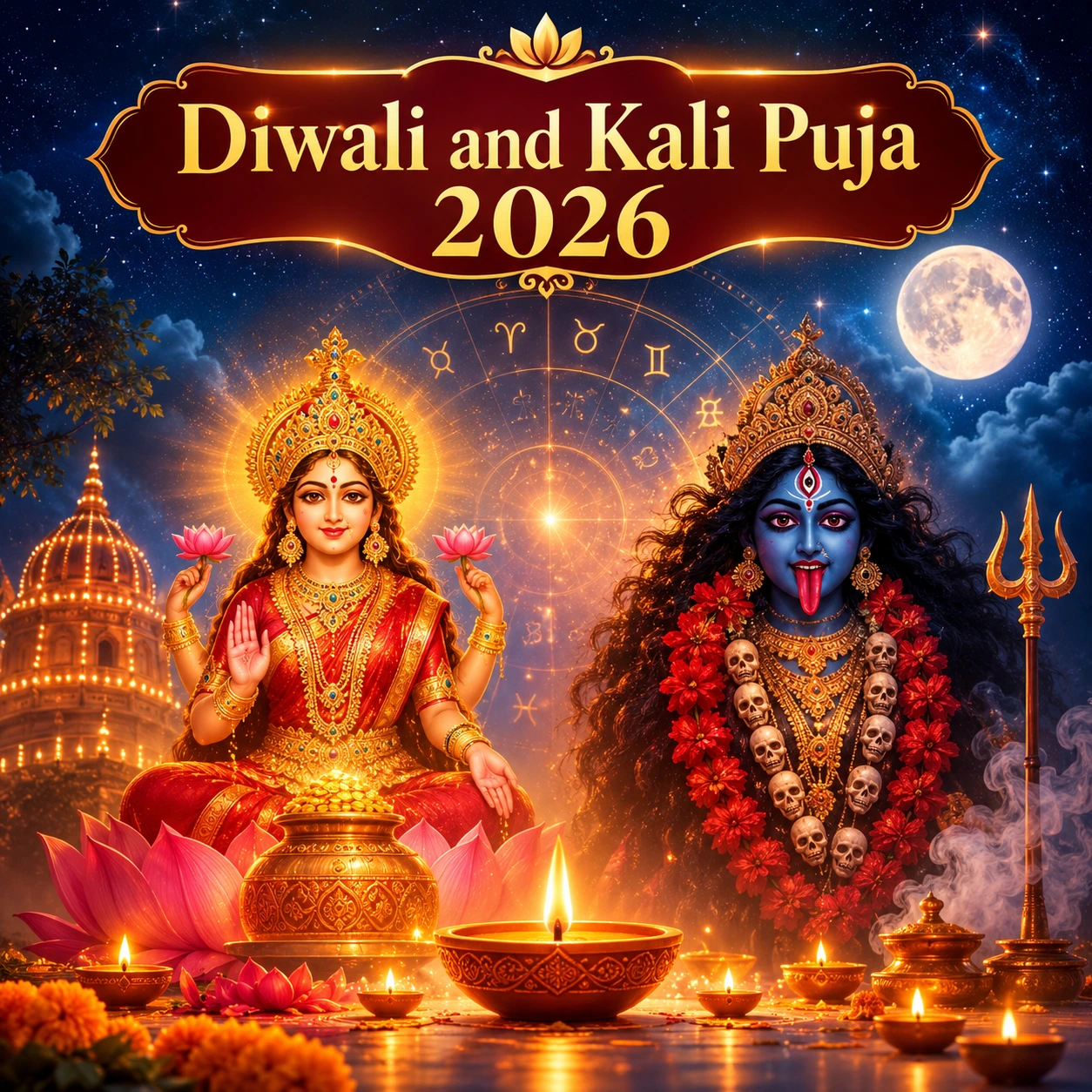
Every year, Bengal lights its lamps for Maa Lakshmi at dusk and folds its hands before Maa Kali at midnight. In 2026, both rituals fall on the same night, Sunday, 8 November, and I, Anjan Shastri, consider it one of the most spiritually charged nights of the entire Vedic calendar. Kali Puja Diwali 2026 is not just a festival coincidence. It is a rare alignment of tithi, planets and devotion that rewards those who understand it.
Many families ask me whether they should worship Lakshmi for prosperity or Kali for protection. My answer is always the same: this night asks for both, and Vedic Astrology explains why. Let us look at what makes this night so powerful and how you can make the most of it.
Diwali is celebrated on the Amavasya, the new moon night, of the lunar month of Kartik. In most of India this night is dedicated to Lakshmi and Ganesha. In Bengal, Odisha and Assam, the same Amavasya is the night of Shyama Puja, or Kali Puja. The Bengali tradition of worshipping Kali on this night is closely linked with the Tantric lineage of Nabadwip, where the scholar Krishnananda Agamavagisha is remembered for popularising the worship of Shakti in her fierce form.
An Amavasya is the day when the Sun and Moon stand together in the same sign. In Jyotish, this is a moment of deep stillness. The Moon, the karaka of the mind, is hidden, which is why the night is traditionally used for inner work, mantra and surrender.
During Kartik, the Sun transits Libra, the sign ruled by Venus. On Diwali Amavasya the Moon joins the Sun there. Venus governs wealth, comfort, beauty and relationships, and it is the planet most closely associated with Lakshmi. The Sun, however, is traditionally considered debilitated in Libra, which asks us to work on ego and humility before we ask for abundance. This blend of material blessing and spiritual discipline is exactly what the night teaches.
Lakshmi represents creation, nourishment and stability. Kali represents destruction of what no longer serves us: fear, obstruction and negativity. Astrologically, you cannot hold on to new prosperity if old blockages remain in the chart. Lakshmi Puja in the evening invites abundance, and Kali Puja at midnight clears the path for it.
Kali Puja is performed during Nishita Kaal, the deepest part of the night. This is the time when the Amavasya energy is considered strongest and the mind is least distracted. Traditional texts treat this window as ideal for Shakti sadhana, protective mantras and sincere prayer. Exact timings differ by city, so please check the Kolkata panchang or consult your family priest before you plan the puja.
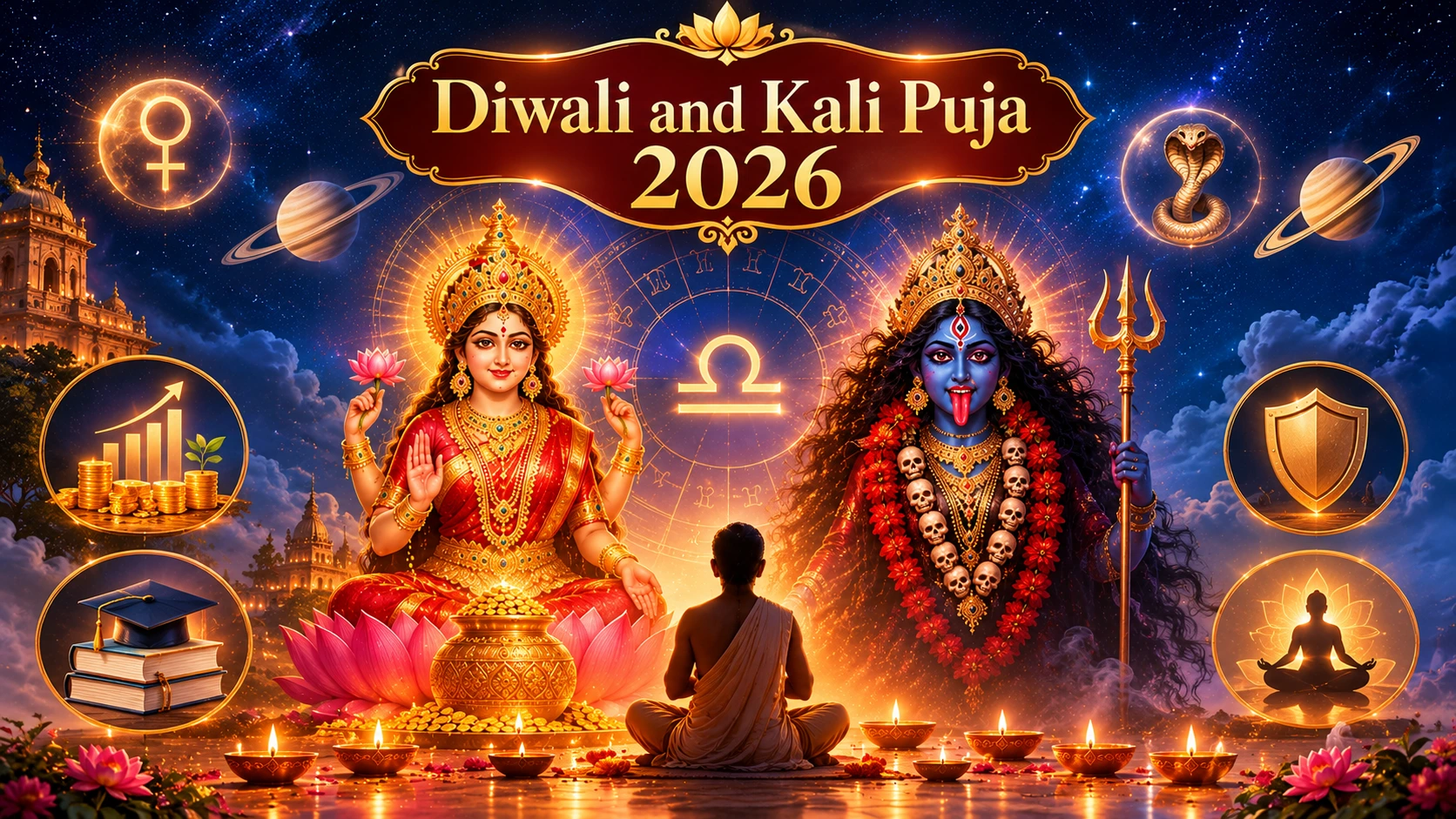
Beyond Venus, two planets deserve mention. Rahu and Saturn are traditionally associated with the shadowy, transformative side of Shakti worship. People running a Rahu or Saturn Mahadasha, or those facing Sade Sati, often feel a strong pull towards Kali on this night. This is not a rule for everyone, but your Kundli can show whether these planets are asking for attention in your life right now.
For business owners, Diwali is the traditional time to open new account books and set financial intentions. For students and job seekers, the quiet of Amavasya supports focus and discipline. For anyone dealing with fear, repeated obstacles or a sense of being stuck, Kali worship is believed to bring courage and release. Because every horoscope is different, results will vary from person to person, so please get your own Kundli checked before drawing conclusions.
Clean your home and light lamps at the entrance and near the tulsi or puja space before sunset. Perform Lakshmi and Ganesha puja in the evening with sincerity rather than extravagance. For Kali Puja, offer red hibiscus flowers, incense and a lamp, and chant the Kali mantra you have been given by your guru or family tradition. If you have no mantra, simple prayer with a calm mind is enough.
Do not treat the night as a transaction, bargaining for wealth in exchange for offerings. Avoid anger, arguments and intoxicants. Do not copy complicated Tantric rituals from videos without proper guidance, because Shakti sadhana should be done only as taught by a qualified teacher. Keep your intention clear, your mind peaceful and your conduct kind.
Q1. When is Kali Puja Diwali 2026?
Diwali and Kali Puja both fall on the night of Sunday, 8 November 2026. Lakshmi Puja is done in the evening and Kali Puja during the Nishita Kaal at midnight. Please confirm local timings with the Kolkata panchang.
Q2. Why are Diwali and Kali Puja on the same night in Bengal?
Both are observed on the Kartik Amavasya. Most of India worships Lakshmi on this night, while Bengal also worships Kali as the fierce form of Shakti.
Q3. Can I worship both Lakshmi and Kali on the same night?
Yes. Many Bengali households do exactly this. Lakshmi is worshipped at dusk, and Kali is worshipped at midnight, each at its proper time.
Q4. Is Kali Puja only for Tantriks?
No. Householders worship Kali across Bengal with simple offerings and prayer. Only the advanced Tantric practices need a qualified guide.
Q5. Can astrology tell me which remedy suits me on this night?
Yes. Your Kundli shows which planets are active in your life and which remedies are suitable, so a personal consultation is always better than a generic remedy.
Kali Puja Diwali 2026 offers a rare chance to invite prosperity and release fear on a single night. Approach it with humility, discipline and faith, and let the light of the lamp remind you that every darkness has an end. May Maa Lakshmi and Maa Kali bless you and your family this Diwali.
To understand what this Diwali means for your own Kundli, call or WhatsApp us on +91 7477886099. Email: astro@anjanshastri.com | Website: anjanshastri.com
Location: Kolkata, West Bengal

Chhath Puja and Surya Dev: How a Strong Sun Shapes Health, Career and Respect
28/10/2026
Kojagari Lakshmi Puja 2026: Date, Puja Vidhi, Alpana and What Maa Lakshmi Blesses on Sharad Purnima
21/10/2026
Rahu Mahadasha: Effects, Challenges and Remedies Every Native Should Know
14/10/2026
Maa Durga's Arrival and Departure on Gaja, Nauka, Doli or Ghora: What the Vahana Predicts for the Year Ahead
07/10/2026
© 2024 Dr Anjan Shastri . All Rights Reserved | Design & Developed by DITS